A HOUSE FULL OF MEMORIES, AND A WIRING PROBLEM THE FAMILY COULDN’T IGNORE
Some jobs are about more than fixing a fault. For one family, their Sorrento holiday house wasn’t just a property; it was built by the customer’s father, and it carried decades of memories from summers and school holidays spent there. So, when sections of the house started losing power and lighting, and the customer began noticing just how old and fragile the wiring really was, it wasn’t simply an inconvenience. It was a genuine, growing worry about the safety of their children and themselves, in a place they’d been visiting their whole lives.
Because the house wasn’t lived in day-to-day, the problem had crept up gradually, worsening over several years, with previous quick fixes patched in here and there rather than a proper solution ever being found. With a family get-together planned for the upcoming school holidays, the customer wanted the problem sorted out properly before everyone arrived to stay.
WHAT OUR INSPECTION FOUND
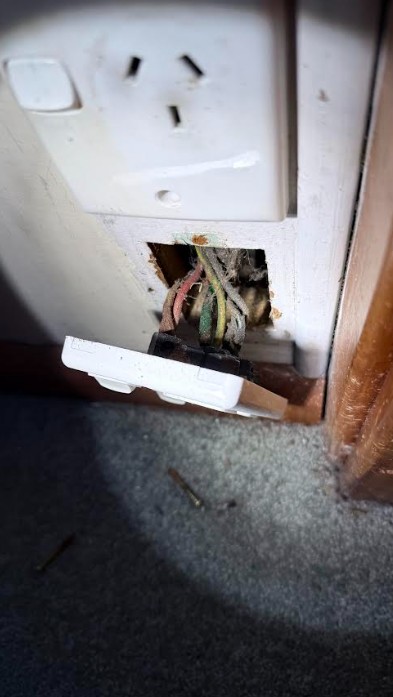
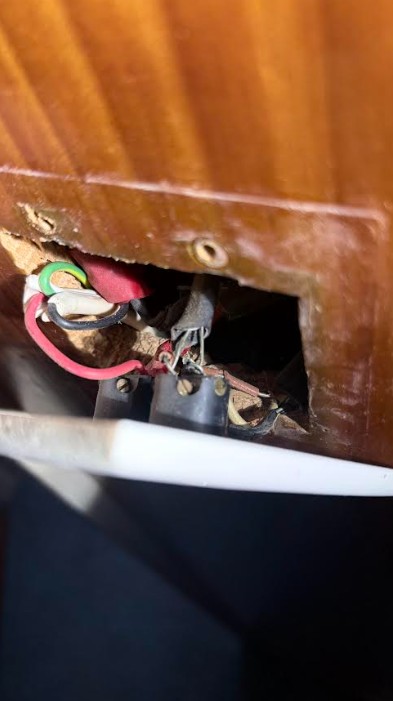
When our electrician Mornington Peninsula locals callattended the property, it became clear the wiring problem was more serious than a few dodgy connections. The home had been built in the 1960s and was still running on its original black rubber VIR (Vulcanised Indian Rubber) cabling in several areas. Some sections had been patched over the years, but the original cable insulation was in such poor condition that it was crumbling away in our hands.
In the master bedroom, this had already progressed to a dead short affecting both the lighting and power circuits. After more than 20 years in the trade, it was some of the worst-deteriorated VIR our electrician had come across.
WHY OLD VIR CABLING BECOMES DANGEROUS OVER TIME
VIR cabling doesn’t need to be damaged or disturbed to fail; age alone is enough. Years of heat exposure gradually cause the rubber insulation to oxidise and dry out, until it loses its flexibility completely and starts cracking and crumbling away from the copper conductor underneath.
The modern household makes this worse. Homes built in the 1960s were never wired to run air conditioners, electric ovens, and a full house of appliances all at once, and pushing that extra load through ageing cable generates more heat than the insulation was ever designed to handle. The more demand placed on old wiring like this, the faster it tends to deteriorate, which is exactly the pattern this property was showing.
A GENUINE FIRE RISK
This wasn’t simply a matter of restoring power to a few rooms. With the cabling already dead shorting, there was a real risk that a failure in the circuit protection could lead to a house fire, a risk made more serious by the home’s internal wall lining, which was western red cedar, a highly flammable material. Identifying and properly resolving faults like this is exactly why professional fault finding matters rather than relying on a temporary patch.
A REWIRE WITH SOME UNIQUE CHALLENGES
This property wasn’t a straightforward rewire. The home had been architecturally designed with a striking curved ceiling upstairs, a feature the customer didn’t want disturbed, and the roof sheeting above it was asbestos, which meant it couldn’t simply be lifted to access the wiring from above.
To protect the ceiling’s clean finish, our team worked out how to reuse existing switch wiring upstairs to rewire the pendant lighting, avoiding unsightly patch repairs to a ceiling that was very much a feature of the home. As the light fittings came down, it also became clear the bathroom and kitchen ceilings were solid cement render, which meant careful chasing with a diamond-blade angle grinder and an industrial vacuum attachment to keep dust out of the living areas.
Downstairs, several walls needed chasing to reach the power points, and clean, discreet holes were cut into the plaster to access the remaining appliances. Along the way, testing also picked up a second problem: the electric cooktop was shorting and at the end of its working life, so our team completed an electrical cooktop installation while already on site.
GETTING THE HOME READY IN TIME
Once every trace of the old VIR cabling had been removed and new power points, switches and light fittings were installed, a plasterer came in to patch the chased walls and ceilings, followed by a painter to bring the finish back to match the rest of the home. With just one day to spare before the family made the trip down for their holiday, a final clean was arranged so the house was ready for a relaxing stay rather than a home mid-renovation.
The following week, the customer got in touch to say how at ease they now felt, knowing the work had finally been done properly.
THE OUTCOME
Every section of deteriorated black rubber VIR cabling was removed and replaced, along with new power points, light switches, external light fittings, and a new induction cooktop. The property was brought fully up to current safety standards, with the fire risk that had been building for years now completely resolved.
For a home that means as much to a family as this one did, that result was about a lot more than just working power points; it was the difference between a lingering worry and genuine peace of mind.
IS YOUR HOUSE STILL RUNNING ON OLD WIRING?
Properties built before the 1970s can still be running on outdated cabling like VIR, even where things seem to work fine on the odd visit. Holiday houses are particularly easy to overlook, since faults that would be noticed quickly in a home lived in every day can go unaddressed for years between stays. If your property has a mix of old and newer wiring, or power and lighting faults that keep coming back despite previous repairs, it’s worth having a proper electrical safety inspection rather than waiting for a bigger problem to appear next time the family’s down.
Contact Copper Fox Electrical today on (03) 8789 8786 or get in touch online to have your home’s wiring properly assessed.