A Cape Schank homeowner was completely without hot water and relying on neighbours to shower. Their 22-year-old hot water system had a burnt-out heating element, corroded electrical connections, and zero electrocution protection — a serious fire and safety risk hiding in plain sight.
The Problem: A Hot Water System That Kept Tripping Off
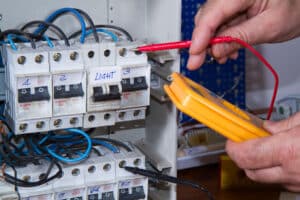
When the Copper Fox Electrical team arrived at a residential property in Cape Schank on Victoria’s Mornington Peninsula, the homeowners had been without hot water for some time — forced to shower at a neighbour’s house while the fault remained unresolved. The hot water system was repeatedly tripping the circuit breaker and shutting itself off, a classic sign of an underlying electrical fault requiring professional fault detection and diagnosis.
Working in conjunction with our sister company Copperfox Plumbing and Gas, we were able to schedule both trades simultaneously — minimising disruption and turning what could have been a multi-day job into a single, efficient visit. If you’re facing a similar situation, our emergency electrical service is available when you need it most.
⚠ Safety Risk
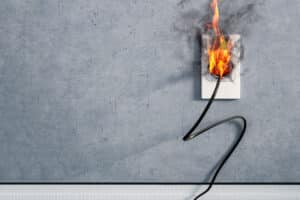
A hot water system that repeatedly trips its circuit breaker is not just an inconvenience — it’s a warning sign that should never be ignored. Each trip puts additional stress on the circuit protection. If the breaker itself fails, cables inside the walls can overheat and start a fire.
Initial Inspection: What Our Electricians Found
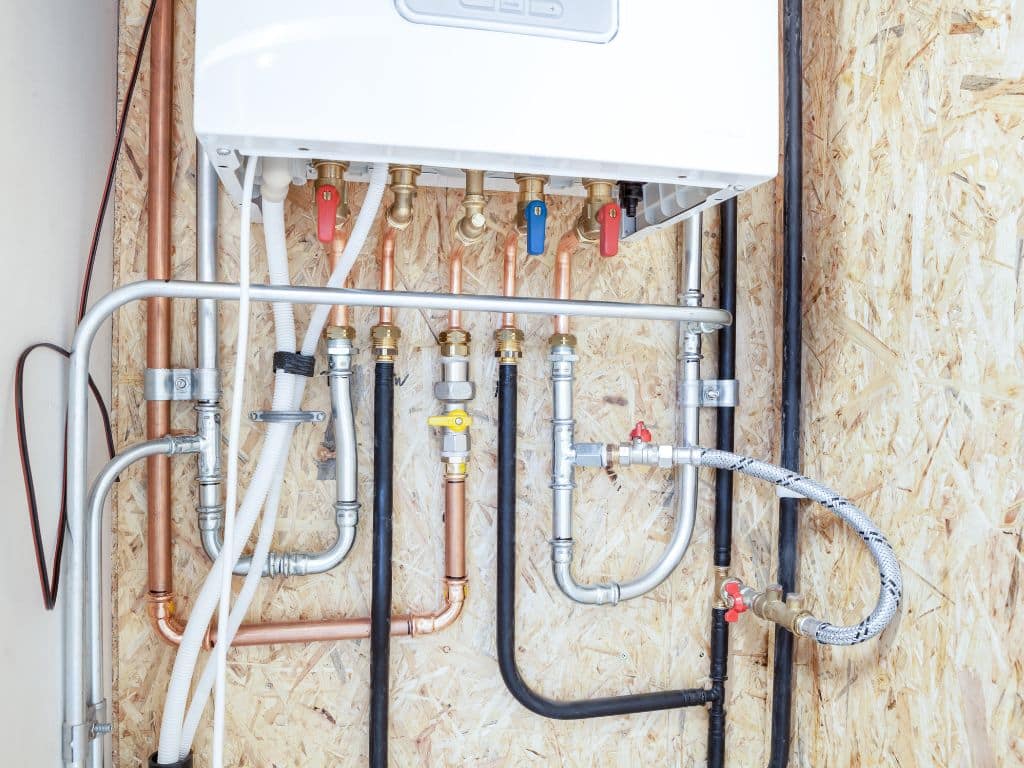
Copper Fox Electrical technicians Caspar Matthews and Cooper Mangion carried out the initial inspection. The house itself was approximately 20 years old and in excellent condition. The hot water unit, however, was around 22 years old and appeared to be the original system installed when the home was built.
The cause of the fault was immediately apparent: the heating element and all associated electrical connections had severely corroded, leading to burn-out and complete system failure. But the element failure was only part of the story — the inspection also revealed a series of serious safety and compliance issues that significantly elevated the risk to the property and its occupants. This is exactly the kind of situation our electrical safety inspection service is designed to uncover before it becomes a crisis.
Safety & Compliance Issues Identified
Beyond the failed heating element, the system had multiple non-compliant and dangerous conditions that needed to be rectified before the hot water service could be safely returned to operation. These are common findings in older homes that haven’t had a recent switchboard or safety switch review:
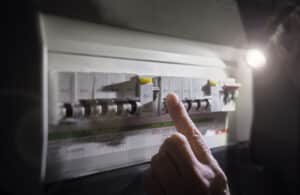
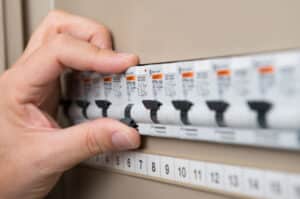
! No safety switch (RCD) protection — If the active/live cable had shorted directly to the metal frame of the unit, anyone touching it could have been electrocuted. No residual current device was installed at the switchboard for this circuit.
! No isolation switch — There was no way to safely isolate power to the hot water unit at the wall, creating a hazard for any maintenance or emergency situation.
! Fire risk from repeated tripping — The circuit breaker had been tripping repeatedly under load. If the breaker itself had failed under this stress, overheating cables inside the wall cavity could have caused a house fire.
! Dual element system without appropriate protection — The system was wired as a dual element configuration but lacked the correct overload and fault protection required for that setup under current Australian electrical standards.
! Outdated circuit protection — The existing circuit protection components were insufficient and did not meet current compliance requirements for a hot water service.
Taken together, these issues meant the system was not only inoperative — it was actively dangerous. A full electrical compliance upgrade was required, not just an element replacement.
Work Completed: Repair & Full Compliance Upgrade
Our licensed electrical repair and upgrade team carried out a comprehensive scope of work, bringing the entire hot water electrical installation up to current Australian standards. All work was completed within 4 hours:
1: Isolated and disconnected the existing power supply to the hot water service safely
2: Installed a new switched isolator at the unit, allowing safe isolation at the wall for maintenance or when leaving the property
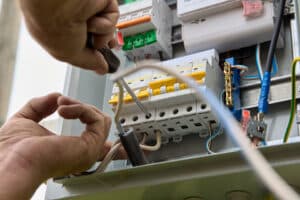
3: Rewired and re-conduited the power cables feeding the hot water service with new compliant cabling and conduit
4: Removed the outdated circuit breaker from the switchboard
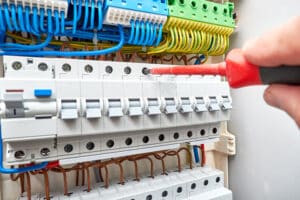
5: Installed a new safety switch (RCD) with full electrocution protection and overload protection, rated for a dual element system
6: Installed a separate weatherproof switchboard enclosure to house the new safety switch cleanly and correctly
7: Tested and commissioned the hot water service — confirmed full operation and correct safety switch function
Before & After: The Difference Compliance Makes
| Before | After |
|---|---|
| System tripping circuit breaker repeatedly | System operating continuously without fault |
| No safety switch — electrocution risk if live wire contacted frame | RCD safety switch installed with electrocution & overload protection |
| No isolation switch — unit couldn’t be safely isolated | New switched isolator at the unit for safe, easy isolation |
| Outdated circuit protection, non-compliant for dual element setup | New switchboard enclosure and compliant protection for dual element |
| Corroded, burnt-out heating element and electrical connections | New cabling, conduit and compliant electrical connections throughout |
| Potential for house fire if breaker failed under stress | All fire and electrocution risks eliminated |
Customer Outcome
Customer Feedback
“The homeowner was relieved that a safety switch had finally been installed — they had every other circuit in the house protected, but hadn’t realised the hot water service was the one gap. They were also delighted with the clean new installation and particularly appreciated the new isolator switch, which means they can now simply turn off the hot water when they head away on holidays — saving electricity without having to touch the switchboard.”
Hot water was fully restored on the same day, within 4 hours of our arrival. The system is now operating safely, correctly, and in full compliance with current Victorian electrical standards.
Key Takeaways for Homeowners
💡 Pro Tip
If your hot water system is over 15 years old, there’s a strong chance it was installed before current safety switch requirements came into force. Even if it’s working fine, it may lack the electrocution protection that current standards require. A professional electrical safety inspection by a licensed electrician can confirm whether your system is compliant — and identify any risks before they become emergencies.
This job is a good example of why a hot water “electrical fault” is rarely just about the heating element. When a system is old, the wiring, conduit, circuit protection, and safety devices all age with it. Replacing an element in an otherwise non-compliant system simply defers the risk.
The Copper Fox Electrical approach is to assess the whole electrical installation — not just the component that failed — so that when we leave, the system is safe, compliant, and built to last. Our electrical maintenance service covers exactly this kind of proactive assessment for Mornington Peninsula homeowners.